How to plant Ophiopogon
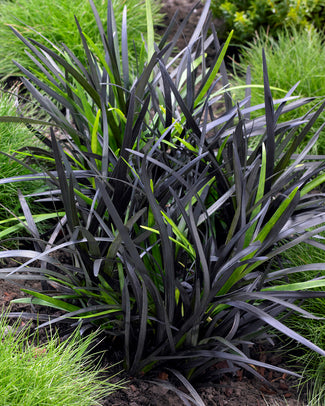
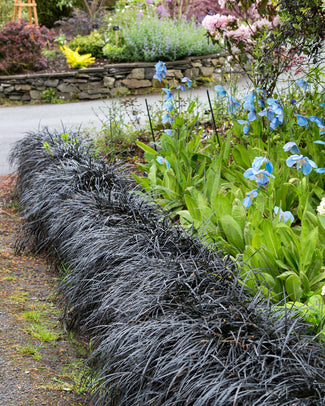
This group of evergreen perennials are part of the Lily family and are related to Convallaria – although they have a much more distinctive grass like appearance, which is their appeal. Often used as ground cover, this clump forming perennial is fully hardy and can be grown in full sun, partial shade or even full shade. Ophiopogon, also known as Lilyturf, isn’t fussy about soil type, tolerating clay soils, sandy soils and rich loamy soils. This useful little plant can be used under shrubs and trees for ground cover or to create a striking contrast, as well as in pots for a modern or edgy feel.
How to plant
— Ophiopogon bare roots are supplied in spring for planting between February and May. They must be planted very soon after delivery and can't be stored without moisture and light. If you can't plant on the day of arrival, unpack the plants within 1-2 days and place roots in a bowl of water outdoors to soak, then plant within a week.
— All bare root ornamental grasses should be potted up and grown on for some time prior to transferring into borders.
— Soak the roots in water for 3-6 hours prior to planting. Pot into temporary 2 litre (or 15-20cm diameter) pots, using a good quality multi-purpose compost with added grit to aid drainage.
— Plant with the roots fully submerged in the compost. There will be some old foliage from the previous year which may be starting to turn brown. This should be left exposed above the soil surface. Fresh new shoots will emerge from the root system in spring among the old leaves.
— Grow them on in a sheltered spot outside. They can be transplanted to suitable growing positions after 2-4 months or once growth is established and the plants easily come out of the temporary pots with the soil held intact by the roots. When you see roots starting to emerge from the drainage holes in the bottom of the pot, it is an indicator that the plant is ready to be transplanted.
— When they’re ready to plant into the garden, choose a position in full sun or partial shade with moist but free draining soil. Dig over the area first to aerate the soil and remove any weeds. Ophiopogon tolerate most soil types but require good drainage, so avoid consistently wet or damp soils. Dig over the area first to aerate the soil and remove any weeds.
— It is recommend to add multipurpose compost to the planting hole when planting, this will add nutrients to the immediate area and provide a soft medium for new roots to grow easily.
— Position your your plant into the hole and backfill the hole with soil. Firm down after planting, ensuring the base of the stems remain level with the soil surface. Water thoroughly after planting.
— Ophiopogon are a popular choice for growing in patio containers as well as for use as ground cover. If your Ophiopogon is intended to grow and remain in a patio container, you can plant the bare root directly into a 20-30cm diameter patio container with fresh multipurpose compost, there is no need to pot up and grow on first in this instance.
— Ophiopogon should be spaced roughly 20cm apart from each other.
— Monitor your newly-planted Ophiopogon for pest damage and remove any excess growth from neighbouring plants in the border to reduce competition.
— This ornamental grass is fully hardy and doesn’t require winter protection.
— Water-in after planting and keep hydrated when in growth, particularly during the first year. Once fully settled in, they prefer quite dry conditions.
— Ophiopogon are evergreen and will have some of the past year's foliage when supplied. The foliage may be starting to die back on arrival if supplied later in spring and this is normal. The leaves can be cut back if desired, or wait for new shoots and leaves to emerge after planting throughout summer.
Aftercare
— These low-maintenance plants are fairly self-sufficient once they’re settled in. They provide year-round interest with their foliage, however they may need tidying from time to time by removing any leaves which have started to die back or lost their colour.
— Ophiopogon forms a clump over time and growth can become congested. In autumn or early spring, you can lift and split clumps and re-plant them further apart from one another, or use the additional sections in other areas of the garden.
— Mulching around them in winter or early spring helps to nourish them and improve the soil structure. The black varieties will have a better colour in sunnier positions, and may become green in deeper shade.
Read further general instructions about planting bare-root ornamental grasses