How to plant Gypsophila
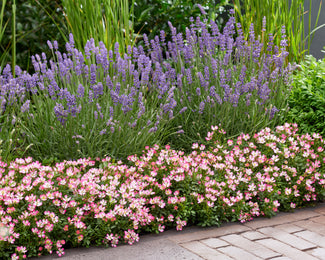
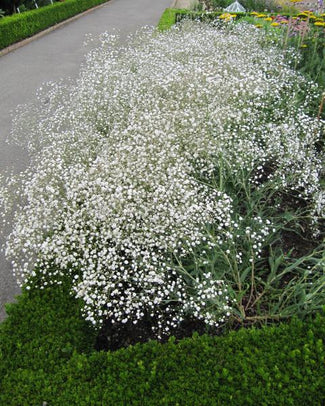
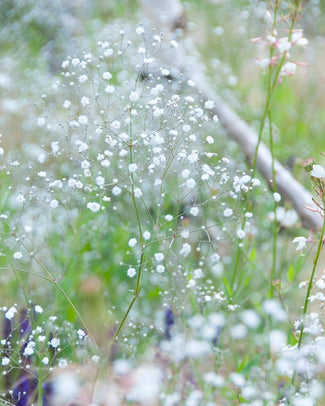
Commonly called Baby’s Breath, it’s not only a favourite for use as cut flowers but makes a beautiful garden perennial too. Gypsophila flowers create a froth of pink or white tiny blooms that float above the narrow foliage on wiry stems. This delicate display may look fragile but don’t be fooled - Gypsophila is surprisingly tough and low maintenance once established. Its best grown in full sun, drifting through the middle of borders among other summer flowering perennials.
Getting bare root plants off to a good start is the key to good development in the season ahead. You'll find all the information you need below to get your Gypsophila bare roots started.
How to plant
— Gypsophila bare roots are supplied in autumn for planting between September and December, and in spring for planting between February and May. Bare root plants should be planted swiftly after delivery as they need light and moisture, and should always be planted in the same season as supplied. If you can't plant on the day of delivery, you should unpack them from your parcel straight away and either add a little water to the packets they're supplied in, or place the roots in a bowl of water so they can soak. Ideally they should be planted within a week of delivery.
— Soak the roots in water for 3-6 hours prior to planting. Pot into temporary 2 litre (or 15-20cm diameter) pots, using a good quality multi-purpose compost. Gypsophila have tap roots and the tapered end should be facing downwards into the soil.
— Depending on the type of Gypsophila you have ordered, it will either have some small buds or shoots at the top (wider end) of the root, or it may have a twiggy part above the top of the root. The bud at the top of the root should be level with the soil surface after planting. If your root has a twiggy part at the top, this should be left exposed. If the roots are too long for the pot, you can use a larger or deeper pot, or carefully bend the root very slightly so that it fits the pot without any root exposed above the soil surface.
— Water thoroughly after planting.
— Grow the potted bare roots on in a sheltered, sunny spot outside. They can be transplanted into borders in a suitable location when they are more established and the plant easily comes out of the pot with the soil held intact by the roots.
— In some cases, Gypsophila bare roots can be planted directly into borders. This is usually ok if you have good soil which is free draining and clear of weeds, if the root is particularly long or large to fit into 20cm pot, and if you mark and carefully monitor the plant while it's settling in.
— Gypsophila thrives in fertile, light, well drained soils. Avoid very heavy clay soils or soils that sit wet in winter, which may cause the roots to rot. Choose a position in full sun.
— This perennial is fully hardy and does not require winter protection, so if you are planting in autumn, you can leave them to grow on outdoors in a sheltered part of the garden.
— Water-in after transplanting and keep well hydrated when in growth, particularly during the first year.
Aftercare
— Gypsophila will start to produce new leaves in spring and you should expect this plant to produce foliage during the first summer. Airy sprays of flowers appear from July to August, often (but not always) in the first year.
— Deadhead faded sprays of flowers when needed to encourage more to be produced.
— The stems will naturally die back in late autumn and can then be trimmed away to around 3cm above ground level.
— Once established, these hardy perennials require virtually no further maintenance aside from cutting back each autumn.
![[]](http://www.farmergracy.co.uk/cdn/shop/products/agapanthus-black-buddhist-1_325x.jpg?v=1575625838 "Agapanthus 'Black Buddhist'")
![[]](http://www.farmergracy.co.uk/cdn/shop/products/agapanthus-black-buddhist-4_325x.jpg?v=1627464050 "Agapanthus 'Black Buddhist'")