How to plant Gaillardia
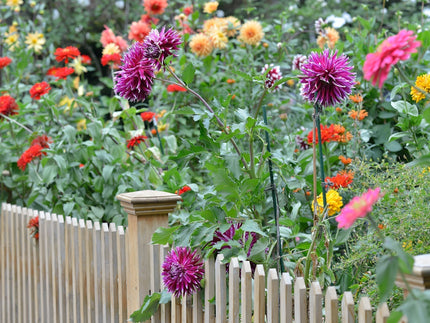
Colourful Gaillardia brings a punch of colour to the front of borders with an abundance of fiery, daisy-like blooms. A succession of disc-shaped flowers make unmissable landing pads for pollinating insects from early summer right through to autumn. They also provide a good supply of irrepressibly cheerful cut flowers with a superb vase life!
These hardy perennials are commonly called Blanket Flower for their resemblance to the vibrant shades used in the traditional Native Americans cloths. Originating from North American prairies, Gaillardia mingles effortlessly with grassland beauties such as Rudbeckia, Helianthus, Panicum and other ornamental grasses. Plant it in an open, sunny spot or a prominent pot on the patio for a high-impact display. Perennial species of Blanket Flower are resilient, coping well with dry conditions once they are well established. There’s no need to worry about fertilizer. In fact the best displays are produced on low nutrient soils.
How to plant:
— Gaillardia plants are supplied in spring for planting between February and May, and in autumn for planting between September and December.
— Gaillardia are supplied as 9cm root ball plants. They are live plants and won't survive for long without moisture and light, therefore they must be planted soon after delivery. If you can't plant on the day of delivery, unpack on arrival and place the plant in a shallow tray of water outdoors and plant within a week.
— 9cm root ball plants can in some cases be planted directly into borders, depending on the soil type, moisture levels and growing conditions in the border. The growing space must be dug over in advance to softed the soil to a crumbly texture and weeds removed. Avoid planting directly into a space with challenging soil or which could soon become over-crowded by more established plants.
— Where growing conditions are challenging (dry, poor soil or crowded area), for best results we recommend potting up 9cm root ball plant into 15-20cm pots using multipurpose compost, they can then be grown on outdoors and transferred to the border when the plant is more established. It will be ready to transfer once the roots begin to appear through the drainage holes in the pot.
— Plant bare roots or root balls so that the entire root system is submerged in the compost, leaving the buds/crown just level with the soil surface. Any young shoots/leaves or stems should be left exposed above the soil surface.
— If planting root ball plants directly into a clear border, or when transplanting grown-on plants, choose a sunny position with free-draining soil and space the plants 20-30cm apart. Add multipurpose compost to each planting hole to help the new roots grow.
— Water well after planting and continue watering whenever the soil feels dry. In the first year while they're settling in, it's important to pay closer attention to watering.
— Gaillarida are hardy and tolerate temperatures to around -10C. If planting in autumn there is no need to protect them from light frosts over winter. If temperatures are likely to fall below -5C, it is a good idea to protect young Gaillardia with mulch or fleece, or move them under cover temporarily during cold snaps.
— Blanket Flowers (Gaillarida) enjoy a low nutrient soil so there is no need to add additional fertiliser as this can encourage leafy growth at the expense of flowers.
Aftercare:
— Gaillardia is a deciduous perennial which will naturally die back in the autumn. New growth will emerge each spring. However in milder areas some basal growth may remain intact over winter. This is best achieved by cutting back the old stems to around 15cm in late summer.
— Deadhead the faded blooms from the base of the stem to promote more flowers.
— Avoid Gaillardia becoming overcrowded by neighbouring plants.
— Once established, Gaillardia is relatively drought tolerant.
— Perennial Gaillardias can be short-lived, particularly in wet locations. Larger clumps can be lifted and divided in spring to create replacement plants.
![[]](http://www.farmergracy.co.uk/cdn/shop/products/agapanthus-black-buddhist-1_325x.jpg?v=1575625838 "Agapanthus 'Black Buddhist'")
![[]](http://www.farmergracy.co.uk/cdn/shop/products/agapanthus-black-buddhist-4_325x.jpg?v=1627464050 "Agapanthus 'Black Buddhist'")