How to plant Clematis
Clematis are the most instantly recognisable climbers, but this large genus also includes less familiar herbaceous perennials too. The eye-catching flowers range from nodding, bell-shaped blooms to wide saucer-like showstoppers in a spectacular range of colours, often attracting pollinating insects to a feast of nectar. Some varieties make exquisite cut flowers while others produce a whirl of attractive, fluffy seedheads after flowering, bringing an extra layer of texture to walls, fences and herbaceous borders.
These spectacular climbers may be deciduous or evergreen, using twining leaf tendrils to cling to trellis, arches and pergolas. Some have a more scrambling habit that’s ideal for cascading down banks or meandering through shrubs, using other plants to support them. Herbaceous species tend to be clump forming with a lower spreading habit. Whether you plant them in a container or directly into borders, they all share the same preference for a sunny, free draining spot with moist, fertile soil.
Clematis are versatile and easy to grow, but for climbing varieties it’s worth checking their pruning preferences to ensure the best displays of flowers each year.
How to plant:
— Clematis are supplied in spring for planting between February and May. You should plant in the same season as supplied, ideally within a week of delivery while they're still fresh and viable.
— Some Clematis varieties are supplied as 9cm root balls (like potted plants with soil on the roots), and some as bare roots (also known as 'pips'). If you can't plant on the day of delivery, unpack on arrival and place 9cm root balls in a tray of water outside and plant within a week. Plants supplied as bare roots/pips should be unpacked on arrival and placed in a bowl of water to soak and planted within a few days.
— Root ball plants are slightly more established than bare roots and can often be planted directly into a clear space in a well cultivated border, depending on the soil type, moisture levels and growing conditions in the border. Avoid planting them directly into a space with challenging soil or which could soon become over-crowded by more established plants.
— Where the growing conditions are considered challenging (dry, poor soil or crowded area), for best results we recommend potting your 9cm root ball plant into a 15-20cm pot using multipurpose compost and growing on outdoors until the plant is more established. It will be ready to transfer once the roots begin to appear through the drainage holes in the pot.
— Clematis supplied as bare roots/pips need to be individually potted up into individual 12-15cm pots using multipurpose compost and grown on for a few months before transferring to a border, this will give them an easier and more reliable start, they can be transferred into a border once they are more established.
— Plant bare roots or root balls so that the root system is fully submerged in the compost, leaving the buds/crown just level the surface. Any young shoots/leaves or stems which have already emerged should be left exposed above the soil surface.
— When transferring into border, choose a position in full sun or partial shade with free-draining soil. Add multipurpose compost to each planting hole to help the new roots grow.
— Most Clematis are climbers and will require a supporting structure to cling to as they grow. A cane, trellis, obelisk, arch, fence or other supporting structure can be put in place prior to planting Clematis into their final positions, or soon afterwards. It is safer to install supports at this stage to prevent damage to the plant later when it's more established. Include a cane when planting for the initial stems to use as support and guide them to the structural plant support.
— Water thoroughly immediately after planting and continue watering regularly in the first year, the soil should be kept lightly moist. Cover the soil around the stem with slate, tile or pieces of broken terracotta to help shade the soil and prevent it from becoming too warm around the roots during summer.
— Clematis are generally hardy and typicallydon't require frost protection. However it is a good idea to protect them with mulch or fleece in the first year, or move newly-potted Clematis under cover during cold snaps.
Aftercare:
Clematis is a broad genus which includes herbaceous perennial and sub shrubs as well as the more familiar shrubby climbers. Although they are planted in the same way, they will require different aftercare.
Climbing Summer Flowering Hybrids:
— Although some climbing Clematis are evergreen, the majority of summer flowering hybrids are deciduous and will naturally lose their leaves in late autumn. New growth will emerge each spring.
— Most Clematis are fully hardy and won’t require winter protection once they are well established, unless this is indicated on the individual product page.
— Train the climbing stems of Clematis onto their supportive frames as they grow. Clematis use twining leaf tendrils to attach themselves to their supports. You can guide the stems into place using soft ties or twine.
— Clematis benefit from correct pruning to ensure a good display of flowers each year. The timing and amount of pruning varies between varieties but they all fall into of the three main pruning groups. Please check the variety that you are growing and use the correct pruning method described below. It doesn’t matter if you get it wrong as this is unlikely to harm the plant but may simply reduce flowering for a year.
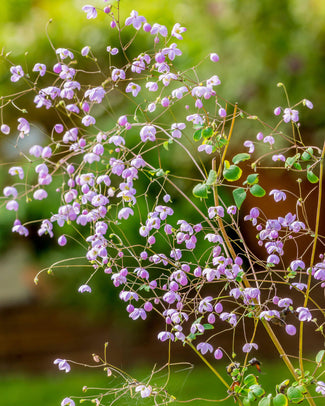
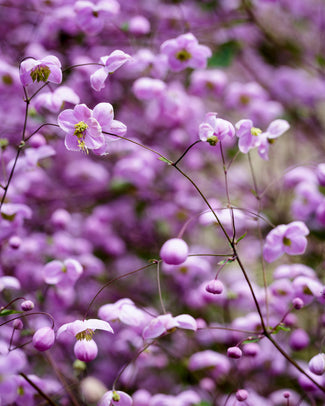
Herbaceous varieties, such as Clematis New Love:
— Herbaceous Clematis do not climb but prefer to scramble through surrounding plants and have a more spreading, clump forming habit.
— Clematis New Love is deciduous and will naturally lose their leaves in late autumn. New growth will emerge each spring.
— This herbaceous variety is fully hardy and does not require winter protection once it is well established.
— In late winter/ early spring, cut back the old stems to just above a pair of healthy buds, roughly 20cm from the base of the plant.
— Herbaceous Clematis will naturally spread once established however overcrowded clumps can be lifted and divide in spring when necessary.
Pruning
Our range of Clematis include varieties from Pruning Groups 2 and 3.
Pruning Group 2 includes varieties such as:
Clematis 'Jackmanii Alba'
Clematis 'Nelly Moser'
Clematis 'The President'
Clematis 'Etoile Nacrée'
Clematis 'Mrs Cholmondeley'
Clematis 'Lindsay'
Clematis 'Violet Elizabeth'
Clematis 'Guernsey Flute'
Clematis 'Tumaini'
Clematis 'Doctor Ruppel'
Clematis 'Miss Bateman'
Clematis 'Piilu'
— Pruning Group 2 Clematis are large-flowered hybrids. These varieties flower in early summer on the previous years growth. They will often provide a second flush of flowers in late summer on the new growth made in the same year.
— Pruning should be undertaken in late winter/ early spring, and again immediately after the first flush of flowers.
— In February, remove any spindly, dead or damaged shoots by cutting back the damaged area to just above a pair of healthy buds. Avoid heavy pruning of healthy stems to maximise flowering in early summer.
— Immediately after flowering, (May-June) prune back some of the stems to a healthy sideshoot or a pair of buds just below the faded blooms. This may encourage a few more flowers to develop in late summer.
Pruning Group 3 includes varieties such as:
Clematis 'Vitiwester'
Clematis 'Jackmanii'
Clematis 'Pink Fantasy'
— Pruning Group 3 Clematis are the simplest to prune. These varieties flower in late summer on growth made in the same year.
— Pruning should be undertaken in late winter/ early spring.
— Simply prune all stems to just above a pair of healthy buds at around 30cm above ground level. New growth will quickly emerge and should be trained onto its supporting structure as it grows.
![[]](http://www.farmergracy.co.uk/cdn/shop/products/agapanthus-black-buddhist-1_325x.jpg?v=1575625838 "Agapanthus 'Black Buddhist'")
![[]](http://www.farmergracy.co.uk/cdn/shop/products/agapanthus-black-buddhist-4_325x.jpg?v=1627464050 "Agapanthus 'Black Buddhist'")