How to plant Cortaderia
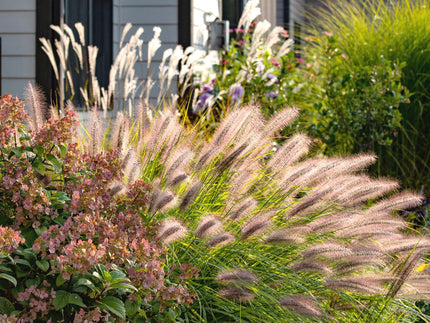
Cortaderia, commonly known as pampas grass, is a bold, architectural perennial valued for its tall, graceful plumes and fountain-like foliage. Best grown in full sun and free-draining soil, it thrives in open, exposed sites and tolerates drought once established. Flowering from late summer into autumn, its feathery seed heads add movement and structure to borders, prairie-style plantings, or as a striking standalone specimen. Fully hardy and long-lived, Cortaderia requires minimal maintenance beyond an annual cut-back in early spring. It also provides shelter for wildlife and adds dramatic, year-round interest to the garden.
Although resilient, vigorous and hardy, Cortaderia will need attention in the first year while it's settling in. Here's how to get them off to the best start:
How to plant
— Plant Cordateria root balls in autumn between September and December, ideally within a week of delivery. They will need water and light after their journey. If you can't plant immediately, unpack them straight away and sit the root ball in a shallow dish of water in a bright place. Cotaderia plants are supplied as 9cm root balls plants.
— Root ball plants can in some cases be planted directly into a clear space in borders, this depends on soil type, moisture levels and whether there are neighbouring plants which will compete. Young Pampas grass plants can settle in well to mois but free draining soil. If you're planting directly into a border, be careful to avoid any space which is close to more established plants which could over-crowd them during the growing season.
— Where the soil type is more challenging, such as heavy clay or very light soils which dry out quickly, you should pot up your rootball plant and grow it on in a pot until it's more established. Pot root balls into temporary 2 litre (or 15-20cm diameter) pots, using a good quality multi-purpose compost. Grow-on in a sunny, sheltered part of the garden until they are a little more established before transplanting into borders. Once you notice root emerging from the drainage holes in the bottom of the pot, they will be ready to transfer into the garden.
— Plant with the roots submerged and with the top of the root system just level with the soil surface. Pampas grass is supplied with the past year's cut foliage. This and any new shoots or leaves which have emerged already should be left exposed above the soil surface. If plnting directly into borders, add multipurpose compost to each planting hole to help the new roots grow.
— Water-in after planting and continue to water regularly whenever the soil feels dry below around 3-5cm from the surface. There is no need to water if the soil feels damp already. You should water regularly, particularly in the first year during spring and summer while the plant is settling in.
— When planting or transplanting into the garden, choose a position in full sun with moist but well-drained soil.
— Cordateria is hardy to around -15-20C and does not require winter protection in most areas.
Aftercare:
— New growth begins in spring, with tall flower plumes emerging from late summer into autumn.Cortaderia can be slow to establish at first, and may take 3-5 years to reach full size. It may not produce plumes in the first or second year, but will develop a clump of arching, grassy foliage.
— In late winter or early spring, cut back old leaves and flower stems to around 30cm above soil level, taking care not to damage new shoots emerging from the base.
— Cortaderia forms a large clump over time. Mature clumps can be divided in spring if needed, though division can be challenging due to the dense root system.
— After flowering, remove stems and old or damaged leaves which are resting on the soil - this tidies the plant and improve airflow, helping to prevent disease.
— Plant at least 1.5m apart to allow space for the mature plant. Wear gloves and long sleeves when handling leaves, as the edges are sharp and can cause cuts.
— Choose a sunny, well-drained position that’s not shaded by surrounding plants. Avoid waterlogged soils, especially in winter.
![[]](http://www.farmergracy.co.uk/cdn/shop/products/agapanthus-black-buddhist-1_325x.jpg?v=1575625838 "Agapanthus 'Black Buddhist'")
![[]](http://www.farmergracy.co.uk/cdn/shop/products/agapanthus-black-buddhist-4_325x.jpg?v=1627464050 "Agapanthus 'Black Buddhist'")