How to plant Ornamental Grasses
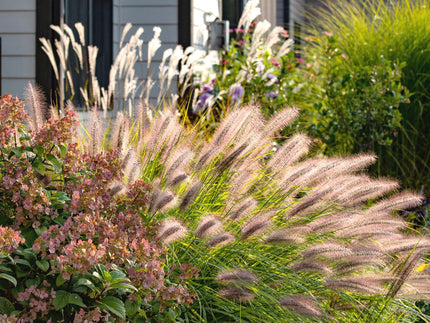
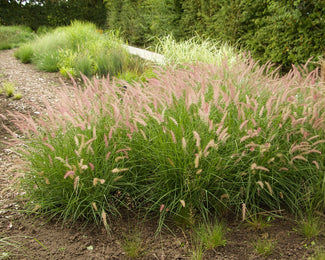
For a low-maintenance garden with a soft, flowing summer aesthetic, ornamental grasses are certainly worth including. There are many different types of ornamental grass which are well suited to a variety of different growing conditions, most bringing height, movement, soft screening and a very long season of interest.
Growing ornamental grasses from bare roots is a great value way to introduce these long-lasting to your garden. You can enjoy watching them grow and establish over the years, eventually becoming reliable garden staples that you and look forward to seeing return every year, each time bigger and better than before.
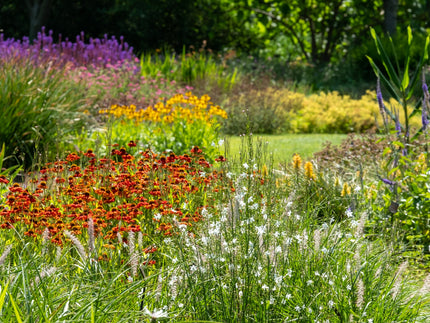
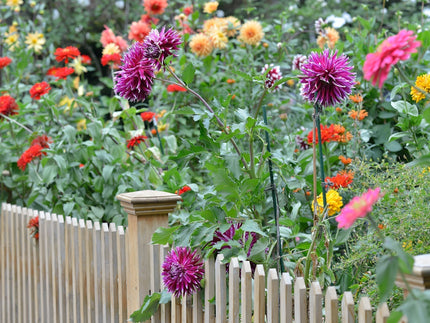
They have attractive foliage through summer which combines will with all kinds of plants, including summer bulbs like dahlias as well as prairie-style perennials like Echinacea and Helenium. Typically flowering in later summer into autumn, they put on a show to look forward to towards the end of the season, with seedheads which flicker in the late-season sun and often enhanced autumn colouring.
Ornamental grasses are perennials and establish over time, gradually forming a good clump. Each spring, new foliage will emerge from the clump in spring and their growing season begins again. Once they are settled in, they require hardly any maintenance at all apart from cutting back once a year either in late autumn or early spring. Despite their resilience and low-maintenance nature, they will require some extra attention in the first year and getting off to the good start is essential to their success.
How to plant ornamental grasses:
— Ornamental grasses are supplied in spring, they should be planted as soon as possible while they’re fresh and viable. They will not remain fresh for a long time in storage and will require light and moisture soon after delivery. If you can’t plant your bare root grasses on the day of delivery, unpack within 1-2 days and put the roots into a dish of water outside, then plant within a week.
— All bare root ornamental grasses, such as Pennisetum, Calamagrostis, Panicum and Miscanthus, should be potted up and grown on for some time prior to transferring into borders.
— Plant your bare root grass into a temporary pot which is around 15-20cm diameter with multipurpose compost. The entire root system should be beneath the compost, with the shoots or past season's dried stems remaining above the compost surface.
— Water thoroughly after planting, allowing the water to drain out of the pot. Position in a sheltered, sunny spot outside to grow on, they should be regularly watered so that the soil doesn't completely dry out during this time.
— It normally takes a few months before they are ready to transfer into the garden, however it can vary depending on the variety and the size of the pot you use. They will be ready to be transferred into borders once roots begin to emerge through the drainage holes of the pot and the plant can easily come out of the pot with the soil held together by the roots.
— When your grass is ready to be transferred, choose a position in a border with good quality, free draining soil. Dig over the area first to loosen the soil and remove any weeds. Avoid planting your ornamental grass too close to a larger plant which will compete with it.
— Dig a hole which is large enough to fit the root ball. Top growth should be left exposed above the soil surface after planting.
— It is recommend to add multipurpose compost to the planting hole when planting, this will add nutrients to the immediate area and provide a soft medium for new roots to grow easily.
— Position your your plant into the hole and backfill the hole with soil. Firm down after planting, ensuring the base of the stems remain level with the soil surface. Water thoroughly after planting.
— Many ornamental grasses look great and grow very well in patio containers. If your ornamental grass is intended to remain in a patio container, you can plant the bare root directly into the patio container with fresh multipurpose compost, there is no need to pot up and grow on first in this instance.
— Bare root grasses are usually supplied with some dried foliage from the past year still intact, this will have been cut in advance of the new growing season. Bare root grasses supplied later in spring will have some pale shoots which have already emerged. The shoots will soon start to green up after planting, watering and being exposed to daylight, additional new shoots will also emerge through May and June.
Aftercare
— Ornamental grasses planted in borders usually grow well without feed. However you can apply a general purpose liquid feed fortnightly during spring and summer to enhance their performance. An application of liquid feed to the leaves can improve the vigour and overall health of the plant and may also increase flowering. Ornamental grasses which are grown in containers will benefit from feeding a few through the growing season and a top up of fresh soil every year.
— All ornamental grasses should be cut back annually either in late autumn or early spring. You can look up care instructions for individual varieties on our planting instructions pages.
— Half hardy grasses like Pennisetum will benefit from being left until spring before they are cut back, the past season's foliage will help to protect the crown of the plant over winter.
— Once your ornamental grasses are well established, typically after 3-5 years, the clump can become large and dense. It is a good idea to split the clump in half or quarters when needed, and this should be done in late autumn or early spring.
— Although ornamental grasses are generally quite drought tolerant, they can suffer in extreme, prolonged drought or hot weather in summer and should be watered during very hot spells.
Look up instructions for specific ornamental grasses
![[]](http://www.farmergracy.co.uk/cdn/shop/products/agapanthus-black-buddhist-1_325x.jpg?v=1575625838 "Agapanthus 'Black Buddhist'")
![[]](http://www.farmergracy.co.uk/cdn/shop/products/agapanthus-black-buddhist-4_325x.jpg?v=1627464050 "Agapanthus 'Black Buddhist'")